
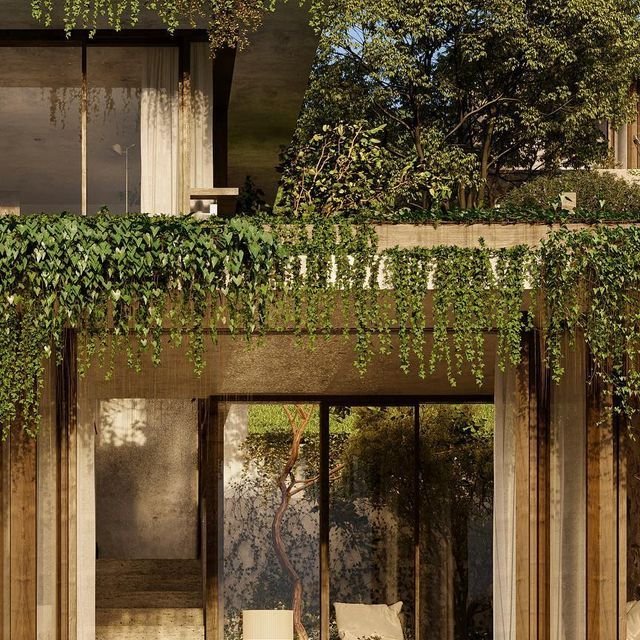
Many traditional materials (timber, clay, stone, lime, bamboo) were once the affordable local materials. Industrialization made synthetic materials cheaper through mass production. Later, the market rebranded many natural materials as "eco-premium" products. As a result, some sustainable solutions became associated with higher-income consumers rather than broad accessibility.
A thought that has been on my mind recently:
Many of the things we now market as sustainable living were once simply called normal living.
- Using local materials.
- Natural ventilation.
- Building only what was needed.
- Repairing instead of replacing.
- Living within local resources.
These were not premium concepts. They were everyday practices.
Yet today, many "eco-friendly" products, materials, and homes come with a premium price tag. In some cases, the very people who practiced these ideas naturally can no longer afford the lifestyle now being marketed as sustainable.
Somewhere along the way, sustainability became a trend.
The irony is that synthetic alternatives are often cheaper than natural ones, despite the latter being more abundant and historically more accessible.
This raises an important question:
If sustainable living becomes increasingly expensive, are we creating a greener future, or simply a greener lifestyle for those who can afford it?


Perhaps the next challenge for our industry is not making buildings more sustainable.
Perhaps it is making sustainability affordable again.
 SUSTAINABILITY THEN AND NOW
#Architecture #Sustainability #Construction #UrbanDevelopment #DesignThinking #FutureCities #AffordableHousing #BuiltEnvironment